




How to Choose the Best Water Filter for Your Home?
by
Dr. Jonathan Doyle - Updated December 29, 2025


When it comes to making sure that your drinking water is of good quality, having the right water filter will make all the difference. Whether it’s hard water, contaminants, or taste problems, having the best water filter can really make a world of difference with regards to your health and well-being. Because there are so many water filters on the market today, it can be very confusing, but I will be here to help you.
Why Should You Use a Water Filter?
As mentioned above, despite having some of the cleanest tap water in the world, Canada can still have contaminated tap water with harmful materials like chlorine, heavy metals, pesticides, and bacteria. However, with a water filtration system that removes these contaminants completely, you can have clean and healthy drinking water at your fingertips.
Aside from water safety, having a water filter can also improve the taste and odor of your drinking water. Perhaps you have noticed that your water tastes and smells slightly of chlorine. A water filter will eliminate this problem.
Ways to Get Pure and Safe Water
The choice of the best water filter depends on various factors, including your needs, type of water, and budget. Below are some of the most common water filters that are widely available on the market:

1. Activated Carbon Filters
Activated carbon filters are among the most common and cost-effective filters. They work on an adsorption principle for removing contaminants such as chlorine, volatile organic compounds , and various chemicals, which affect the taste and odor of water. The filters are excellent if you want better taste and transparency in your drinking water.
Pros:
Reliable and cost-effective
Affordable and easy to use
Excellent at eliminating chlorine and organic materials
Improves taste and odor
Cons:
Not effective on heavy metals and bacteria
Needs regular replacement
2. Reverse Osmosis Filters (RO)
Reverse osmosis filters have excellent filtration capacity. The process uses pressure to force the water through a special membrane that filters out up to 99% of the contaminants, heavy metals, salts, and bacteria. Reverse osmosis filters are perfect for households with hard water or where water contamination might be an issue.

Pros:
Removes various contaminants like heavy metals, bacteria, and salts
Offers highly purified water for drinking and cooking
Instant filtered water at home
Lower your water bill in the long run
Cons:
Expensive upfront cost
Wastes water during the filtration process
Needs periodic maintenance
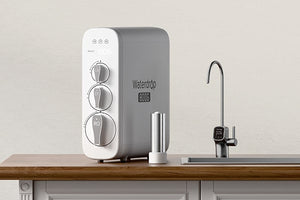
Waterdrop X Series Reverse Osmosis systems remove harmful components effectively and maintain healthy minerals. As a result, Waterdrop Reverse Osmosis systems have been widely adopted in Canada.
3. Ultraviolet (UV) Filters
UV filters rely on ultraviolet light to disinfect water and kill bacteria, viruses, and pathogens. Moreover, they are usually combined with an additional filtration technique, such as activated carbon filters or reverse osmosis.

Pros:
Excellent for killing bacteria and viruses
Chemical-free purification process
Suitable for residential use with water that may be biologically contaminated
Cons:
Does not remove other contaminants like heavy metals and chlorine
Needs electricity to function
4. Faucet-Mounted Filters
Faucet-mounted filters are very easy to install and allow water filtration at your kitchen sink. Such filters are useful if you are on a budget yet want a method to improve your drinking water.
Pros:
Easy to install and use
Low cost
Compact size
Cons:
Limited filtration capacity
Requires frequent replacement

Factors to Consider When Making Decision
1. Water Quality in Your Area
Before buying a water filtration system, it is necessary to evaluate the water quality in your area. If your water contains excessive levels of chlorine, heavy metals, and hard minerals, you may need to invest in a more advanced filtration system.
You can check your water report for local water quality or have your water tested. You can also use a water testing kit from some brands of water filters, such as Waterdrop, so that you know which water filter will be most optimal for your house.
Related article you may be interested in: How to Test Water Hardness .
2. Filtration
Try to identify which contaminants you are most concerned about. For example, if your water contains a great deal of chlorine, an activated carbon filtration system will work well at eliminating the odor and taste. If you have heavy metals, such as lead or mercury, reverse osmosis would be better suited.
If bacteria or pathogens are your main concern, a UV filter would be exactly what you need. In some cases, a combination of filters might be the best solution.
3. Filter Capacity and Lifespan
Check what the replacement capacity and duration are for your particular filter. Some filters need more frequent replacement, while others can be replaced after several months. Reverse osmosis filters, for instance, have a longer replacement life but may need occasional maintenance.
4. Ease of Installation and Maintenance
Certain filters are easy to set up and maintain, such as faucet-mounted filters and pitcher filters. However, some filters, including reverse osmosis filters and distillation filters, might require professional installation and maintenance.
5. Cost
The cost of water filters may differ based on various factors and brands. Faucet-mounted or pitcher water filters are relatively inexpensive, but a reverse osmosis system might be more expensive. Nevertheless, considering the advantages it brings, investing in a good water filtration system is worthwhile, as it will provide you with clean water and save you money in the long run.

Best Water Filters for Canadian Homes
When selecting a water filter for residential use, it’s important to choose a product that offers efficient functionality, good value for money, and easy usage. Some highly recommended reverse osmosis water filters include Waterdrop X Series RO Systems and G Series RO water filters .
To select the perfect water filtration system for your home in Canada, identify your needs and budget. You can select an activated carbon filtration system, reverse osmosis water filtration system, or even a UV filtration system. Make sure your filtration system works optimally to serve your family with clean, healthy, and delicious water.
For those who want an efficient and high-performance product, reverse osmosis systems from Waterdrop are a great option. They utilize modern filtration technologies that will meet your needs.

Choose Your Water Solutions
- Countertop RO Systems No Installation, Easy Everyday Use
- Undersink RO Systems High Flow, More Space Under the Sink
- Water Filter for Sink Stay Hydrated Always
- RO System Replacement Filters Change Your Filters Regularly
Categories
- Buyer's Guide Complete buying guides to help you choose wisely
- Water Contaminants Offer the best solution to solve the water problems
- Water Stewardship Responsibility for sustainable water management
- Home and Wellness A better and healthier world for individuals and families
- Explore Waterdrop Discover water filtration solutions for every home.


